Chiang Lab
UCLA Interventional Oncology | Chiang Lab
Research ProjectsImage-guided cancer therapy, from the patient to the bench and back
The Chiang Lab is a multi-disciplinary group in the Department of Radiological Sciences at the David Geffen School of Medicine at UCLA. In the hospital, we use minimally-invasive image-guided approaches to treat solid cancers; in the lab, we combine engineering with immune, metabolomic, and epigenetic approaches to overcome the limitations of current therapies. The bench-to-bedside distance is intentionally short. Every project here is designed to ultimately affect patient care and improve patient outcomes.
What we work on
Why tumors survive ablation, and how to stop them. Thermal ablation controls early-stage hepatocellular carcinoma well, but the heat from the antenna falls off sharply at the margin, leaving a rim of tumor cells exposed to sublethal hyperthermia. We study what happens to the cells in that rim, specifically the metabolic signatures that precede tumor recurrence, and the proteins that let a tumor withstand heat it should not survive. The goal of this project is to predict which tumors will come back before they do.
Combining thermal ablation and embolization with next-generation therapies. Sublethal heat and radiation do not simply leave tumor cells alive; it changes them, upregulating factors that enable them to hide from the immune system. We are working out how to restore immune surveillance of these residual tumor cells with local delivery of natural killer cell-based immunotherapy as well as antibody-drug conjugates.
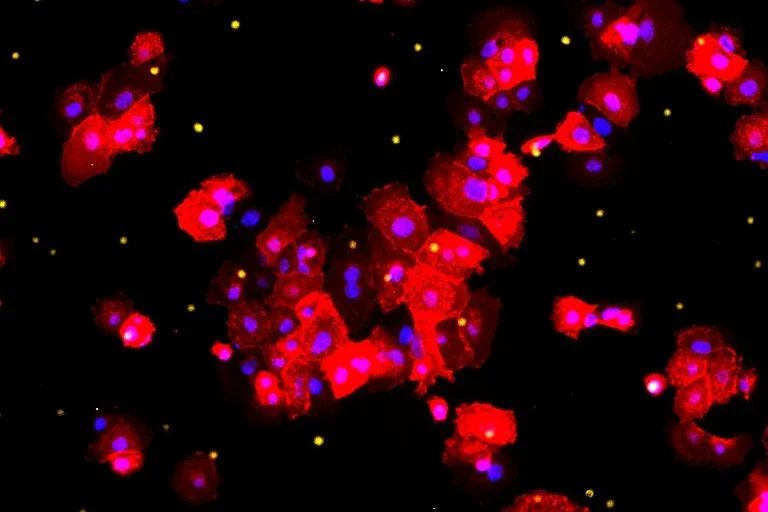
Microbubbles that know where to go. Microbubbles are already in clinical use as non-invasive ultrasound contrast agents, which makes them an unusually practical vehicle for targeted imaging and drug delivery. We label them site-specifically with antibodies against tumor markers so that the microbubbles can find these tumors, letting clinicians know what tumor surface markers exist without biopsy.
Better dosimetry for Y90. Yttrium-90 (Y90) radioembolization is a common procedure used to treat solid tumors of the liver. However, it is currently unclear where the Y90 beads actually end up due to limited information about blood flow hemodynamics. We are building tools that use artificial intelligence and flow modeling to predict how Y90 dose actually distributes between tumor and normal liver in an individual patient, so that the prescribed dose fits the patient rather than a population average.
Read more about our research
Thanks to the support and funding of: